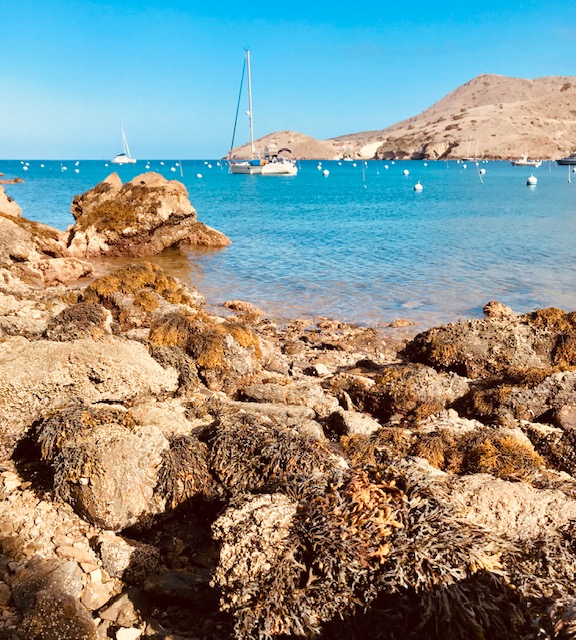
Today, we did our first intertidal survey of organisms that live between low tide and high tide. Our data will contribute to a longitudinal study that helps scientists track change over time of the intertidal zone around Catalina. Researchers are interested in this zone because of its high biodiversity, climate change, harvesting and recreational impacts.
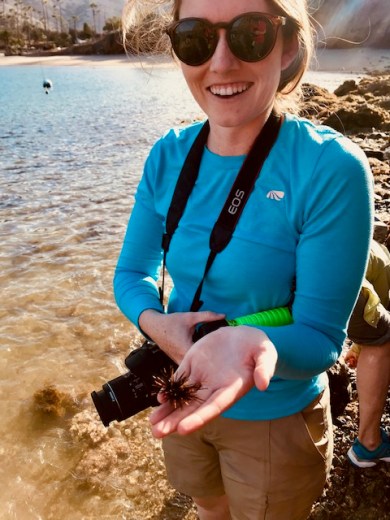
How tempting is it to take and keep a Miyazaki-looking sea urchin from a tide pool, if you happen to find that treasure? Of course, it’s not a good idea, because, yes, it’s really alive!
For our study, we measured out a transect of 20 meters along the splash zone, and in groups collected data with our quadrats at low (0 meters), middle (5 meters), and high (10 meters) tide. I have really fond memories of looking for tide pool organisms with my kids when they were little, and still love finding all of the interesting living things that make their home in this zone. It’s the best kind of treasure hunt, and me and my partner Joanie were not disappointed. A sea hare was our favorite find.
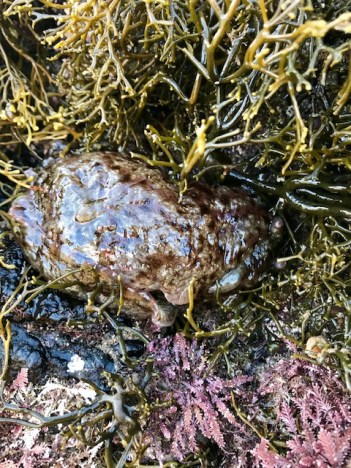
It may look like just a rock, but that is just good camouflage. I don’t know if I liked their gooey, snot-like texture the most, or the gorgeous patterns that are part of their camouflage. Either way, they hide very well. Watch this video to see the California Sea Hare in action:
Sea Hares are among the largest marine gastropods and can weight up to about 4 pounds. They also turn the color of whatever sea plants they eat and can spew toxic ink to deter predators. The sea hare we found in the intertidal zone eats a lot of red algae that is toxic to predators. The appendages on their heads that look like ears and give them their name are called rhinophores and are actually smell/taste organs.
Tomorrow, we complete our intertidal surveys at another location, and I’m really hoping to find a sea star. Sea stars are becoming harder and harder to find and researchers are wondering why. I wonder if you have any ideas about why scientists are seeing a reduction in sea star populations?
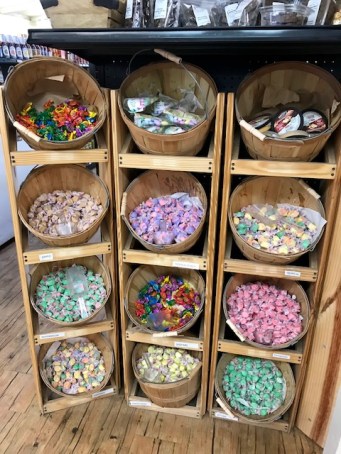
After our intertidal surveys, we stopped at a really cute beach shop that had salt water taffy. I bought some for you guys, and I’m much more inclined to share it with students who have been completing their work while I’ve been away and answering my blog post assignments!
Do one of the following in the comments:
1.) Share 3 facts about the California Sea Hare, either from the video or your own research.
2.) What could be causing a decline in sea star populations? What makes you think so?

 Conserving Marine Life on Catalina's Coast
People might be picking up the sea stars and leaving them out in the sand or taking them home. I can only imagine how long a sea star would live without water. They are very interesting creatures to little kids but they are not toys.
LikeLiked by 1 person
One thing I think may be causing the sea star population decline is pollution, I think this because I know that pollution has caused a decline in the population of many animals.
LikeLiked by 1 person
One thing that may be causing a sea star decline is invasive species. Invasive species could be forcing them out of their habitat of killing them.
LikeLiked by 1 person
1.
-The maximum recorded length of a California Sea Hare is 75 cm, but most are about half that size.
– Since California Sea Hares consume algae, they have a large amount of toxins in its body, which means that they have very few predators.
– When a Sea Hare is disturbed it can release two different types of ink to defend itself.
LikeLiked by 1 person
The California Sea Hare is a species of Sea Slug.
The average Hare is 30 inches long.
They’re herbivorous creatures, mostly eating red algae.
LikeLiked by 1 person
Share 3 facts about the California Sea Hare, either from the video or your own research.
1: Can be found on the Pacific coast of California
2: Adults can weigh up to 15 pounds
3: Giant green anemone is one of the California Sea hared very few preditors
LikeLiked by 1 person
1.
The maximum length recorded for a California Sea Hare is 75 centimeters.
They usually occupy the intertidial and sub-littoral zones.
The California Sea Hare is herbivorous.
LikeLiked by 1 person
California Sea Hare
– scientific name Aplysia californica is a type of sea slug in the sea hare family, Aplysiidae
– can grow to be as long as 75 cm (29 in) in length with a weight of up to 13.6 kg (30 lb)
– It does not spray ink like other sea hares
Starfish are dying due to a group of viruses that cause gastrointestinal problems. The viruses can be found in unvaccinated dogs.
LikeLiked by 1 person
California Sea Hare facts:
1. One of its predators is the Giant Green Anemone
2. They eat red algae and are an herbivore
3. It uses ink to protect itself from spiny lobsters
LikeLiked by 1 person
Option 1:
Fact 1: Sea hares are herbivores, and are found in shallow water near or on seaweed.
Fact 2: They use camouflage and ink to protect themselves from spiny lobsters and other predators.
Fact 3: They can grow to be as long as 75 cm (29 in) in length with a weight of up to 13.6 kg (30 lb).
LikeLiked by 1 person
I think the sea star life decline is most likely due to pollution because it really affects marine life and I think that is the most logical answer.
LikeLike
The California sea hare can weigh up to 4 pounds. To keep predators away, they eat red algae and can spray toxic ink. They are the largest marine gastropod.
LikeLike
1: Can be found on the Pacific coast of California.
2. They eat red algae and are an herbivore.
3: Giant green anemone is one of the California Sea hare’s very few predictors.
LikeLike
California Sea Hare facts:
1. They are herbivores
2. They are found on or near seaweed
3. It uses ink to protect itself from spiny lobsters
LikeLiked by 1 person
1
The max length for a California Sea Hare is 75 cm.
The California Sea Hare is a species of Sea Slug.
a predator is the green anemone
LikeLiked by 1 person
People could be moving the sea stars, making them not able to hang onto the rock and they float away and die.
LikeLiked by 1 person
1. Can be as long as 75 cm
2. Lifespan is usually of one year.
3. Are usually around31 cm long
LikeLiked by 1 person
I believe that the population is going down because of people picking them up from the ground and either moving them to a place where they die or the chemicals on the people’s hand kill them. It is also possible that all of the pollutions in the water has been affecting them and possibly killing them off
LikeLiked by 1 person
1. They are herbivores
2. They use camouflage and ink to protect themselves from spiny lobsters and other predators.
3. It uses ink to protect itself from spiny lobsters
LikeLike
Sea Hares
1. When sea hares are threatened by predators they squirt out a purple liquid
2. The purple color in the liquid is from red algae in the ocean
3. Sea hares can’t see, other than being able to tell light from dark
LikeLiked by 1 person
Hi Cathy! Thank you so much for the salt water taffys! I think the sea star population is declining due to climate/water temprature change. I think this is affecting their habitats and thier ability to survive.
LikeLiked by 1 person
Sea hare facts:
1: They only live along the coast of California.
2: They can lay up to 80 million eggs, but most eggs are eaten by predators.
3: All sea hares have both male and female sexual organs.
LikeLiked by 1 person
Sea hare facts are:
They are herbivores.
They use camouflage and ink to protect themselves from spiny lobsters and other predators.
It uses ink to protect itself from lobsters
LikeLike
I think that the drop in population is that there might still be some leftover chemicals from the DDT.
LikeLike
I think that kids are making the sea urchin because they bring them home and they die because they are not in their regular habitat.
LikeLike
I think they are getting harder to find because they are dying and sadly the population is diminishing. 3 facts: It turns the color of what is eating, it sprays toxic ink to deter predators and it is very slimy
LikeLike
I think the sea star’s population is decreasing because of pollution. the population could also be decreasing because people are finding them, and leaving them in places where they can’t thrive.
LikeLike
The reason starfish population is going down because of pollution, I think this because many animals drop because of that.
LikeLike
The drop in sea star population may be because of leaked chemicals from large industrial plants and such
LikeLike
the decrease of starfish could be caused by plastic since they are bottom feeders they eat all the junk at the bottom so the might eat some plastic and get stuck in the digestive track
LikeLike
Sea Hare Facts:
1) Sea hares are hermaphroditic (male and female)
2) A Sea Hare can lay up to 500 million eggs in one breeding season
3) They are herbivores
LikeLike
3 facts about the California Sea Hare:
1. they are the largest marine gastropods and can weigh up to about 4 pounds
2. they turn the color of whatever sea plant they eat
3. they can spew toxic ink to deter predators
LikeLike
Sea hare can weigh up to 4 pounds,
change color to what they eat
Spray toxic ink to scare predators
LikeLike
The seahare is a type of sea slug
It has toxins in its body because it consumes algae
It defends itself from predators by releasing chemicals
LikeLike
I think the cause of the sea star population to decline s pollution because a lot of animal populations have declined through pollution.
LikeLike
I think that the sea stars are going extinct because of ocean acidification
LikeLike
3 facts about Sea Hares:
1. They consist of nine genera: Aplysia, Bursatella, Dolabella, Dolabrifera, Notarchus, Petalifera, Phyllaplysia, Stylocheilus and Syphonota.
2. They range in size from species that grow up to 2 cm, to species that grow more than 70 cm in length.
3. They have been called Sea Hares since classical times because they look similar to – at least in European species – a sitting hare.
LikeLike
I don’t know why sea star pop is decreasing one thing could be because there is this disease going around to sea stars and killing them.
LikeLike
Sea Hare Facts
1. Changes to the color of algae it eats
2. Will use venom on predators
3. The longest one ever recorded is 30 inches long.
LikeLike
They might be because they are getting eaten by things like predators.
LikeLike
1. A sea hare can lay up to eighty million but a lot of them get eaten. They prefer to graze in red algae. The longest sea hare was 75 cm long.
2. People could be taking the sea stars and then they could dry up. Many kids think they are cool and they might want to take them home.
LikeLike
California Sea Hare
1. The maximum length of sea hare is 30in
2. They eat algae
3. They release ink
LikeLike
Hi Cathy! Thank you so much for buying us the salt water taffy!
3 facts about a California sea hare:
1. Species of sea slug
2. A predator of a California sea hare is the Giant Green Anemone
3. California sea hares are herbivores
LikeLiked by 1 person
California Sea Hare
– Sea hares may lay up to eighty million eggs at once but most of the eggs are eaten by predators
– The maximum length of a sea hare is 30 inches
– Sea hares can play the role as both genders
LikeLike
Share 3 facts about the California Sea Hare, either from the video or your own research.
1, it’s a sea slug, like the cucumber
2, has predators like the anemone
3, some can grow to 70cm
LikeLike
California Sea Hare:
Can grow to be as long as 75 cm
Most sea hare species expel a cloud of purple ink
Related to the octopus and the squid
LikeLike
California Sea Hares –
1.) The sea hare’s scientific name is Aplysia californica.
2.) Sea hares tend to eat red algae.
3.) There are few predators that eat the sea hares due to the toxins produced. One of the major predators however is the giant green anemone.
LikeLike