Today, we did an MPA Watch, where we hiked to the top of the ridge and surveyed the waters surrounding the east edge of the island for any human violations. This is important data for scientists, since it can be difficult to monitor Marine Protected Areas due to their size and scale. Our surveys contribute to a database that helps to keep these areas pristine and safe from harmful human impact.
This picture shows the Wrigley Science Institute and cove from the top of the ridge.
Does that fog in the background look familiar? 🙂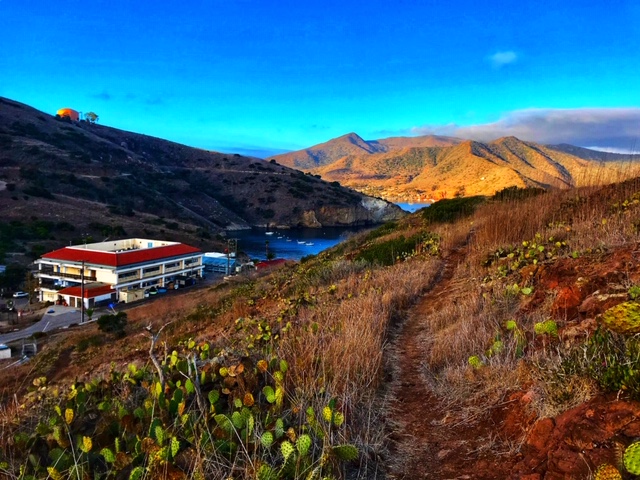
Remember, Marine Protected Areas are places that protect entire ocean ecosystems. MPAs protect the existing marine biodiversity at 3 levels: ecosystem, species and genetic. They also provide resilience to protect against potentially damaging external impacts, such as global warming and ocean acidification. Around Catalina Island, no one is supposed to anchor boats, fish, or do anything consumptive. On our MPA watch, we spotted two kayakers who were violating MPA regulations, as they had fishing gear on the boats–evidence that they were fishing in waters that are specifically designated as no take zones. We recorded it, and uploaded the data so that actions can be taken, such as increased monitoring of certain areas.
Later in the afternoon, we got to go to the touch tank, which is in front of the research center in the above picture, with the smaller roof. It was absolutely amazing! I got to hold all kinds of echinoderms–a family of sea organisms with spiny skins; a sea urchin as it moved in my hand, a starfish and sea cucumber. Did you know that some species of starfish can release an arm when threatened, and then GROW A WHOLE NEW BODY FROM THAT ONE ARM? Here are a few of my favorites from the touch tank.
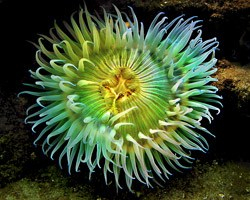
We visited the touch tank in preparation for our rocky intertidal survey out in the field. We will be surveying intertidal organisms and contributing data to a research study that has been collecting data on these organisms for several years. More on this tomorrow!
Do one of the following and reply with your answers in the comments section:
1.) Look up the 4 words in bold in this post, and define them.
2.) Identify the 3 sea animals from the touch tank organisms using this guide:

 Conserving Marine Life on Catalina's Coast
1. Biodiversity: Noun
The variety of life in the world or in a particular habitat or ecosystem.
2. Consumptive: Adjective
Affected by a wasting disease.
3. Intertidal: Adjective
Of or denoting the area of a seashore that is covered at high tide and uncovered at low tide.
4. Ocean Acidification: Noun
A term used to describe significant changes to the chemistry of the ocean.
LikeLike
biodiversity: a variety of different organisms in an ecosystem
intertidal: an area of seashore that is covered when it is high-tide and uncovered at low tide
ocean acidification: A decrease in pH in the Earth’s ocean. It is caused by the uptake of carbon dioxide (CO2) from the atmosphere. It is ongoing.
consumptive: something that has a waisting disease
LikeLike
Biodiversity: The variety of life in the world or in a particular habitat or ecosystem.
Ocean acidification: A term used to describe significant changes to the chemistry of the ocean.
Consumptive: Relating to the using up of resources.
Intertidal: Of or denoting the area of a seashore that is covered at high tide and uncovered at low tide.
LikeLike
1. Intertidal – “of or denoting the area of a seashore that is covered at high tide and uncovered at low tide.”
Consumptive – “affected with a wasting disease, especially pulmonary tuberculosis.”
Ocean Acidification – “Ocean Acidification (OA) is a term used to describe significant changes to the chemistry of the ocean. It occurs when carbon dioxide gas (or CO2) is absorbed by the ocean and reacts with seawater to produce acid.”
Biodiversity – “the variety of life in the world or in a particular habitat or ecosystem.”
LikeLike
I think you saw a Solitary Green Anemone, a Wavy Top Turban Snail, and a Sea Cucumber! Have fun on your last day!
LikeLike
– biodiversity is the variety of organisms and microbiomes in an ecosystem.
– Ocean acidification is a term used to explain variations to the chemistry of the ocean. Ocean acidification happens when CO2 is incorporated by the ocean results with seawater producing acid.
– consumptive is the use of resources, using up resources.
– Intertidal is known as foreshore and seashore and can be referred to as the littoral zone. It is an area that is above water at low tide and underwater at high tide.
1. Solitary Green Anemone
2. Wavy Top Turban Snail
3. Warty Sea Cucumber
LikeLike
Option 1.
biodiversity: “The variety of life in the world or in a particular habitat or ecosystem.”
ocean acidification: “Ocean Acidification (OA) is a term used to describe significant changes to the chemistry of the ocean. It occurs when carbon dioxide gas (or CO2) is absorbed by the ocean and reacts with seawater to produce acid.”
consumptive: “Affected with a wasting disease, especially pulmonary tuberculosis.”
intertidal: “Of or denoting the area of a seashore that is covered at high tide and uncovered at low tide.”
LikeLike
Ocean Advocation is characterized by fundamental changes in seawater chemistry occurring throughout the world’s oceans.
Intertidal organisms are organisms denoting the area of a seashore that is covered at high tide and uncovered at low tide.
Biodiversity is the diversity in the life of species in a certain organism.
Consumptive is an adjective- affected by a wasting disease.
LikeLiked by 1 person
Picture 1: Solitary Green Anenome
Picture 2: Warty Sea Cucumber
Picture 3: Wavy Top Turban Snail
LikeLiked by 1 person
Biodiversity: the variety of life in the world or in a particular habitat or ecosystem.
ocean acidification: is when Carbon Dioxide is absorbed by the ocean and it produces acid.
consumptive: the act or process of using up something (as food or coal)
Intertidal: between the high tide and low tide
LikeLiked by 1 person
Biodiversity means variety of ocean life. Ocean acidification means a decrease of pH levels in the ocean. Consumptive means a wasting disease. The first picture is a solitary green anemone. The second picture is a Warty sea cucumber and the last picture is a wavy top turban snail.
LikeLiked by 1 person
-Biodiversity: The variety of life in a certain place/the world in a particular habitat or ecosystem.
-Ocean Acidification: Is when Carbon Dioxide is absorbed by the ocean and produces acid.
1: Solitary Green Anemone
2: Warty Sea Cucumber
3: Wavy Top Turban Snail
LikeLiked by 1 person
1. Warty sea cucumber
2. Wavy top turban snail
3. Solitary Green Anemone
LikeLiked by 1 person
Biodiversity: the variety of life in the world or in a particular habitat or ecosystem.
Ocean Acidification: is the production of acid when Carbon Dioxide is absorbed by the ocean.
Consumptive: the using up of something.
Intertidal: between the high and low tide.
LikeLiked by 1 person
Picture 2: Warty Sea Cucumber
Picture 3: Wavy Top Turban Snail
Picture 1: Solitary Green Anenome
LikeLiked by 1 person
2:
Warty sea cucumber
Solitary green anemone
wavy top turban snail
LikeLiked by 1 person
Pic #1: Solitary Green Anemone
Pic #2: Wavy Top Turban Snail
Pic #3: Warty Sea Cucumber
LikeLike
1. Solitary Green Anemone
2. Wavy Top Turban Snail
3. Sea Cucumber
LikeLike
1.echinoderms–a marine invertebrate of the phylum Echinodermata, such as a starfish, sea urchin, or sea cucumber.
2.Intertidal – “of or denoting the area of a seashore that is covered at high tide and uncovered at low tide.”
3. “Ocean Acidification (OA) is a term used to describe significant changes to the chemistry of the ocean. It occurs when carbon dioxide gas (or CO2) is absorbed by the ocean and reacts with seawater to produce acid.”
LikeLike
Ocean acidification: A term used to describe significant changes to the chemistry of the ocean.
Biodiversity: The variety of life in the world or in a particular habitat or ecosystem.
Intertidal: Of or denoting the area of a seashore that is covered at high tide and uncovered at low tide.
Consumptive: Relating to the using up of resources.
LikeLiked by 1 person
I believe the first picture is of a Solitary Green Anemone. The second picture is of a Wavy Top Turban Snail. And the last picture is of a Warty Sea Cucumber
LikeLike
Biodiversity/Noun
The variety of life in the world or in a particular habitat or ecosystem.
Ocean Acidification is a term used to explain variations to the chemistry of the ocean. Ocean acidification happens when CO2 is incorporated by the ocean results with seawater producing acid.
Consumptive: Relating to the using up of resources.
LikeLike
Absolutley perfect–nicely done!
LikeLike
1) Biodiversity: the variety of life in the world or in a particular habitat or ecosystem.
ocean acidification: is when Carbon Dioxide is absorbed by the ocean and it produces acid.
2) Consumptive: the act or process of using up something (as food or coal)
3) Ocean Acidification: “Ocean Acidification (OA) is a term used to describe significant changes to the chemistry of the ocean. It occurs when carbon dioxide gas (or CO2) is absorbed by the ocean and reacts with seawater to produce acid.”
LikeLike
1- Solitary Green Anemone
2- Wavy Top Turban Snail
3- Warty Sea Cucumber
LikeLike
bidiversity- the variety of life in the world or in a particular place, habitat or ecosystem
ocean acidification: is when carbon dioxide is absorbed by the ocean and it produces acid
consumputive- relating to the using of forces
LikeLike
1. wavy top turban snail (the one that looks like a turban)
2. solitary green anemone
3. warty sea cucumber
LikeLike
Really Interesting, Cathy! I wish I could be there!
The first word, biodiversity, means the variety of life in the world or in a particular habitat or ecosystem. The second word, Ocean Acidification, means the decrease of the pH of water over time. I have learned that this destroys sea life and reefs. This can happen because of the co2 of the air being absorbed by the ocean, another effect of climate change! The third word, Consumptive, means to use up resources. The last word, intertidal, means the change between high and low tide.
Thanks for this amazing article,
Thijs
LikeLiked by 1 person
1) biodiversity: a variety of different organisms in an ecosystem
2) intertidal: an area of seashore that is covered when it is high-tide and uncovered at low tide
3) ocean acidification: A decrease in pH in the Earth’s ocean. It is caused by the uptake of carbon dioxide (CO2) from the atmosphere. It is ongoing.
4) consumptive: something that has a wasting disease
LikeLike
the first one is a Solitary Green Anemone
the second one is Wavy Top Turban Snail
the last one is a Sea Cucumber
LikeLike
Biodiversity: The variety of life in the world or in a particular habitat or ecosystem.
Ocean Acidification: When the ocean absorbs carbon dioxide and release acid
Consumptive: Any usage of force
LikeLike
biodiversity: the variety of life in the world or in a particular habitat or ecosystem.
ocean acidification: the ongoing decrease in the pH of the Earth’s oceans, caused by the uptake of carbon dioxide
consumptive: using up sources
intertidal: of or denoting the area of a seashore that is covered at high tide and uncovered at low tide.
The Animals
solitary green anemone
swirly top turban snail
sea cucumber
LikeLike
biodiversity: A variety of life in a specific place
ocean acidification: Decrease of pH in the ocean, caused by carbon
consumptive: Being effected of a disease
LikeLike
solitary green anemone
wavy top turban snail
sea cucumber
LikeLike
biodiversity: is the different species of life in the world or in a particular place, habitat or ecosystem. consumptive: The relation to the forces.
ocean acidification: When carbon dioxide is absorbed by the ocean and it produces acid
LikeLike
Biodiversity: The variety of life in the world or in a particular place, habitat, or ecosystem
Ocean Acidification: A term used to describe significant changes to the chemistry of the ocean. It occurs when carbon dioxide gas (CO2) is absorbed by the ocean and reacts with seawater to produce acid.
Consumputive: Relating to the using up of resources
You saw a Solitary Green Anenome, Wavy Top Turban Snail, and Sea Cucumber
LikeLike
Biodiversity is when carbon dioxide is absorbed by the ocean to create acid. Ocean acidification is when the pH level in the ocean decreases. Consumptive means a wasting desesase.
1: Solitary Green Anemone
2: Warty Sea Cucumber
3: Wavy Top Turban Snail
LikeLike
intertidal The part of the land that is covered by high tide
biodiversity When carbon dioxide goes into the ocean and acid comes out
consumptive- relating to the using of forces
ocean acidification Fall of PH in the ocean.
LikeLike
1. Biodiversity: Noun
The variety of life in the world or in a particular habitat or ecosystem.
2. Consumptive: Adjective
Affected by a wasting disease.
3. Intertidal: Adjective
Of or denoting the area of a seashore that is covered at high tide and uncovered at low tide.
4. Ocean Acidification: Noun
A term used to describe significant changes to the chemistry of the ocean.
LikeLike
Definitions
Interdial- denoting the area of a seashore that is covered at high tide and uncovered at low tide.
Biodiversity- the variety of life in the world or in a particular habitat or ecosystem.
Ocean Acidification- a term used to describe significant changes to the chemistry of the ocean.
Consumption- affected with a wasting disease, especially pulmonary tuberculosis
LikeLike
1. biodiversity- a variety of different organisms in an ecosystem
ocean acidification: the ocean becoming acidic because of releasing carbon dioxide.
consumptive: affected with a wasting disease
intertidal: area of seashore covered by high tide and uncovered by low tide
2. A wavy turban shell, sea cucumber, and a solitary green anemone
LikeLike
1st animal: sea urchin
2nd animal: turban snail
3rd animal: sea cucumber
LikeLike
Biodiversity: the variety of life in the world or in a particular habitat or ecosystem.
Consumptive: relating to the using up of resources.
Intertidal: of or denoting the area of a seashore that is covered at high tide and uncovered at low tide.
Ocean Acidification: the ongoing decrease in the pH of the Earth’s oceans
LikeLike
Biodiversity: the variety of life in the world or in a particular habitat or ecosystem.
Ocean acidification: Ocean acidification is the ongoing decrease in the pH of the Earth’s oceans, caused by the uptake of carbon dioxide (CO2) from the atmosphere.
Consumputive: affected with a wasting disease, especially pulmonary tuberculo
Intertidal: of or denoting the area of a seashore that is covered at high tide and uncovered at low tide.
animal 1.
Solitary Green Anemone
animal 2.
Wavy Top Turban Snail
animal 3.
Warty Sea Cucumber
LikeLike
I think that you saw a Solitary Green Anemone, a Wavy Top Turban Snail, and a Warty Sea Cucumber.
LikeLiked by 1 person
1. Intertidal
– Signifying the area of a seashore that is covered at high tide and uncovered at low tide
2. Biodiversity
– The diversity of life in a habitat
3. Ocean Acidification
– The action a carbon dioxide (CO2) being absorbed into the ocean causing a decrease of pH in the ocean.
LikeLike
Biodiversity: is the different things in an ecosystem.
Ocean acidification: When the acidity levels in the ocean rise
Consumptive: when resources get used up
Intertidal: the space that is covered and uncovered during high and low tides.
1, turban shell
2, sea cucumber
3, sea urchin
LikeLike
1.) Intertidal – “of or denoting the area of a seashore that is covered at high tide and uncovered at low tide.”
2.) Biodiversity – “the variety of life in the world or in a particular habitat or ecosystem.”
3.) Ocean acidification – “When carbon dioxide (CO2) is absorbed by seawater, chemical reactions occur that reduce seawater pH, carbonate ion concentration, and saturation states of biologically important calcium carbonate minerals. These chemical reactions are termed “ocean acidification” or “OA” for short.
4.) Consumptive – “affected with a wasting disease, especially pulmonary tuberculosis.”
LikeLike
Intertidal:
adjective
of or denoting the area of a seashore that is covered at high tide and uncovered at low tide
consumptive:
adjective
affected with a wasting disease, especially pulmonary tuberculosis
biodiversity:
noun
the variety of life in the world or in a particular habitat or ecosystem
ocean acidification:
noun
Ocean acidification is the ongoing decrease in the pH of the Earth’s oceans, caused by the uptake of carbon dioxide in the atmosphere.
LikeLike