Today, we traveled from the Wrigley Research Institute to see different parts of the island and have a fun adventuring day (even thought it’s all been really fun). Our final destination was a little resort town on Catalina called Avalon. We all traveled together in a van on some pretty winding roads and rocky terrain, but we made some interesting stops along the way.
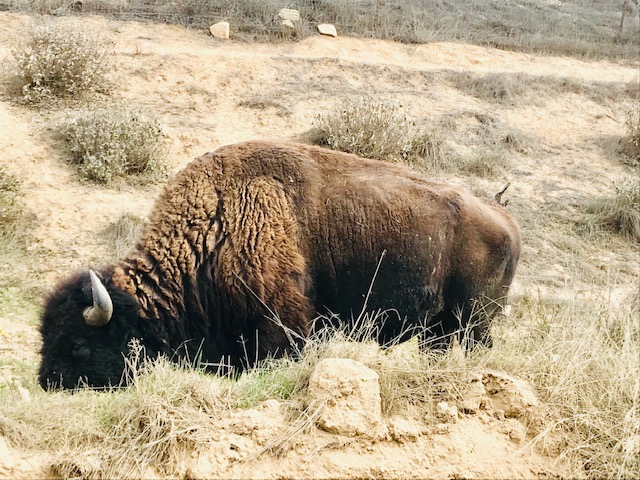
This may come as an odd surprise to learn (it was for me!) that there are bison on the island. They were brought over to Catalina for a movie that was being filmed here in 1924 and have been here ever since. The bison population today is about 150 individuals. We saw quite a few in our travels, close up and far away, as well as solitary and in roaming herds. Lynn, our team leader, took this shot of a male bison–it was this close to us! Good thing we were in a van, which was much bigger.
Our first stop was at an animal rescue and rehabilitation center that is currently helping to recover a bald eagle and a golden eagle who have been injured and can no longer survive on their own. At this site, our group learned all about the amazing recovery efforts that you all have been reading about in your article Fighting for Foxes. I won’t repeat them here. It was cool to see a bulletin board while we were there that has been keeping an eagle chick count, and on the board it highlighted that in 2018 so far, 20 baby eagles have been born on Catalina Island, the most in the project’s history! That is a great accomplishment. I also learned that there are live eagle cams that you can watch of eagle nests on the island. Here is one from West End on Catalina, check it out:
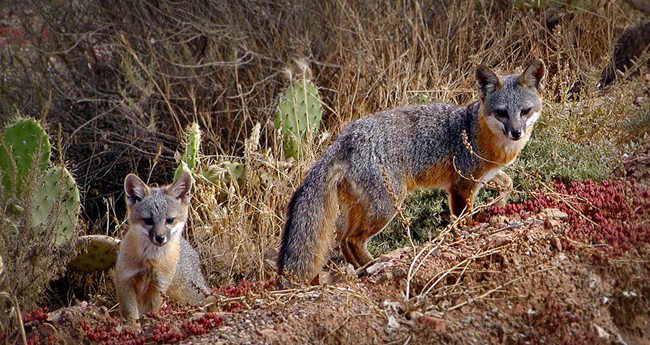
Next stop was Avalon, and we relaxed on the beach, visited a botanical garden, and ate chips and salsa before we headed back to make it to Shark Harbor in time for sunset. We stopped at the local airport for homemade cookies, and I finally saw Catalina Island foxes! I was so excited, and could see why they are so miniature. They like to hang around places where people have food, because food sources are scarce for them. The good news is, there is a healthy population here, and have moved from endangered to near threatened status, which is a significant conservation success story.
Our last stop before home was Shark Cove, where we watched a beautiful sunset.
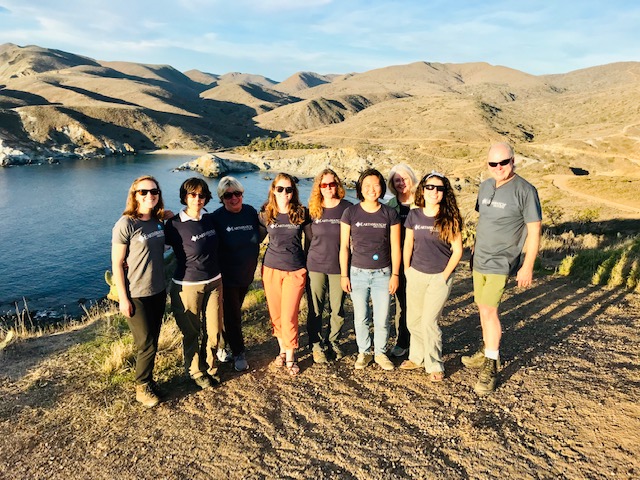
Finally, we all drove back to the research station with our head in the clouds. Literally.
It was a gorgeous day!
Answer the following question:
Some people argue that the bison on Catalina Island should not be here because they are not native to the island, are eating plants that could provide nourishment for endemic species, and should be removed. Other people say that they should stay because they attract tourists. What do you think makes the most sense, and why?

 Conserving Marine Life on Catalina's Coast
I think that the bison should stay until they are overwhelming.
LikeLike
I believe that it makes the most sense to move them somewhere else but, all the animals including the bison have gotten used to having them live there so taking them away might affect the other animals in a negative way.
LikeLike
I think that they should not be there because if they are affecting the native animals then they are harming the island.
LikeLike
I think that if they are causing damage to the ecosystem, they should be removed, however, I think that they have been endangered in other parts of the world so they could just be relocated.
LikeLike