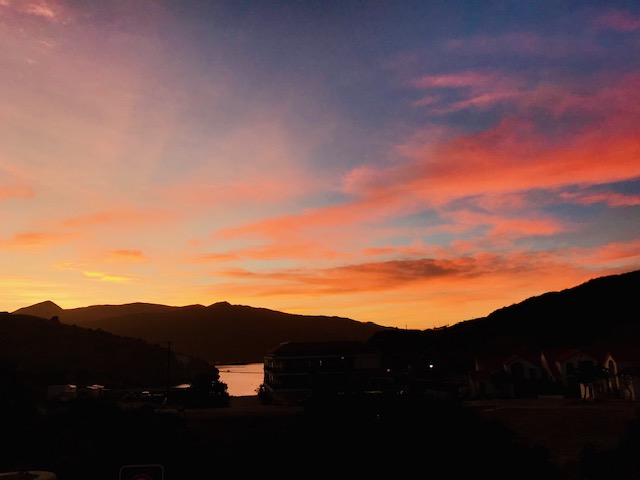
This was our view from where we ate dinner at the research institute this evening.
One of the many cool things happening with this field research experience, are the people that you meet and what you can learn from them. We all come together for meals, and you have many opportunities to talk to scientists about their research and what brings them out to Catalina. Here are some of the things we’ve talked about in our conversations regarding what make islands really special places.
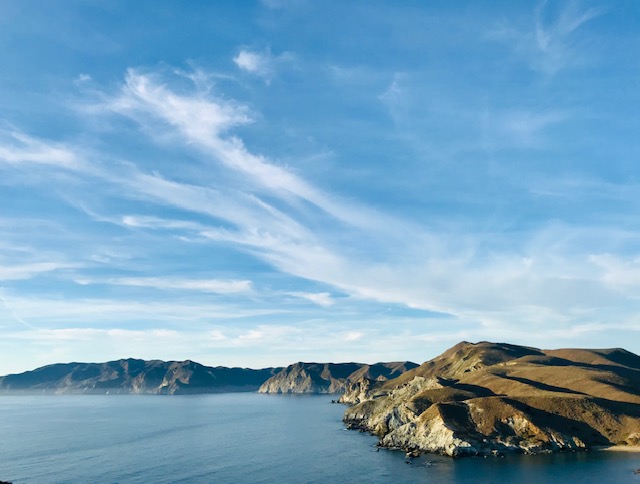
Islands have one thing in common
The inhabitants on islands migrated to their homes from somewhere else. Some swam, some flew, others were carried by animals, wind, floating debris, or in recent times, by humans. As a result, islands are home to fewer species than continents. Populations for each species also tend to be smaller. These, along with other factors, make island ecosystems especially vulnerable to change.
Inconceivable!: Endemic Species
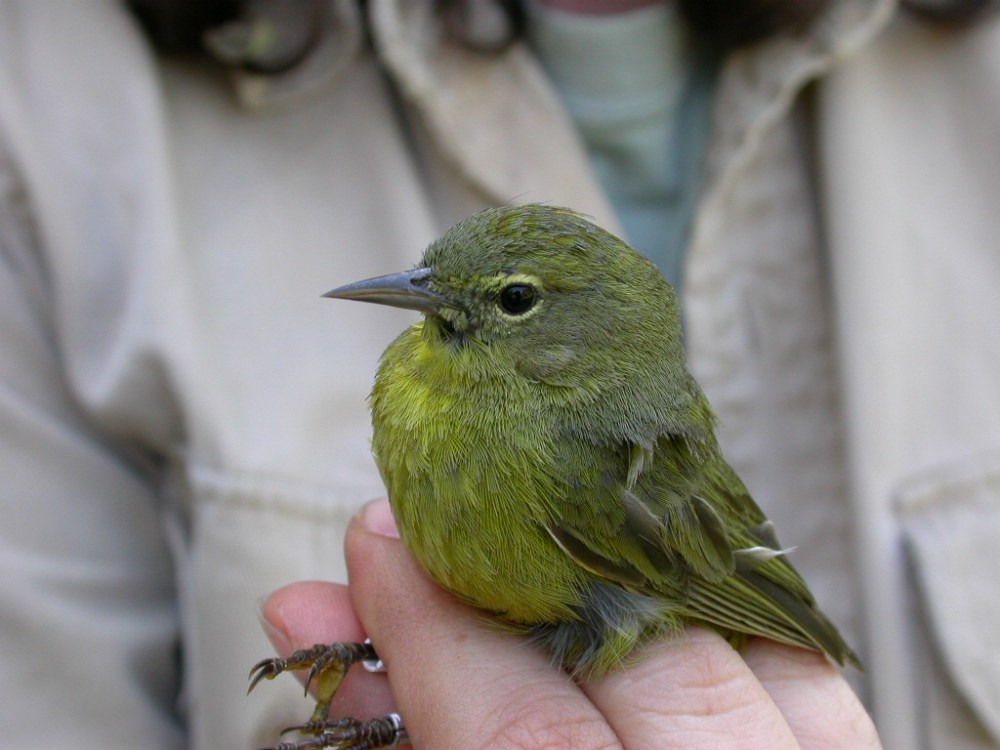
A species is considered endemic when it is found only in one area or region. Islands generally have many more endemic species than continents. These island plants and animals often evolve to be different from their mainland relatives. This Orange-Crowned Warbler below is only found on Catalina Island.
Rodents of Unusual Size (ROUS): Island Dwarfs and Giants
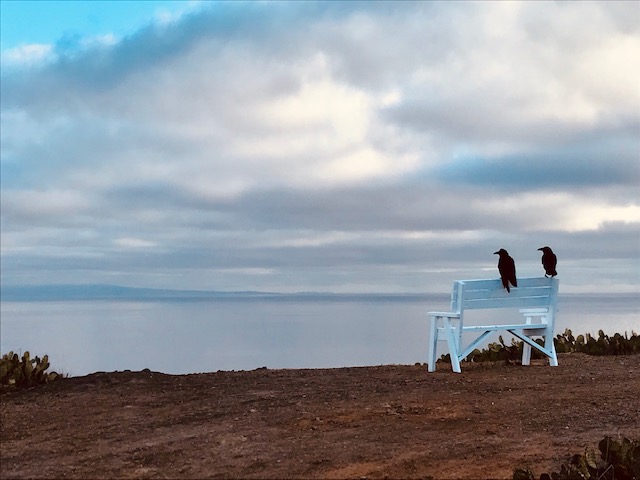
Reduced competition for resources and greater abundance of food can cause some island species to evolve to be larger. This is known as “island gigantism.” Lack of natural predators and scarcity of food can cause some island species to evolve to be smaller. This is called “island dwarfism.” For instance, the squirrels and ravens are HUGE here. And the Catalina Island Fox is so adorably little.
The Dread Pirate Roberts: Dangerous Invaders
Introduced plants, animals, and diseases pose a tremendous threat to islands. The addition or removal of a single species can drastically upset the balance of an island ecosystem. When we snorkeled today, we observed an algae that is starting to take over the marine environment around Catalina. If it continues to spread, it can overcrowd the more beneficial algae species that provide a food and habitat for local fish to flourish.
It’s hard to convey just how inspired I am by all of the work that is being done here by scientists to learn about and/or address these issues!
In the comments, write one thing you learned/found interesting, and one thing you are wondering about islands.

 Conserving Marine Life on Catalina's Coast
I found it really interesting that animals range in many different, and sometimes unusual, sizes. What is your favorite part about this trip?
LikeLike
I found it interesting that island gigantism and island dwarfism occur because of extra or less recourses. A question I have is: Do island animals often have mainland counterparts? How are they different and similar?
LikeLike
I learned about how the sea animals got to the island and thought that was very interesting. My question is, what are the other animals that you saw snorkeling?
LikeLike
I find it really cool that animals are bigger since they dont have predators, also they have much more food so they can eat in peace.
LikeLike
I learned that invasive plants, animals or organisms are very bad and can cause serious damage in the environment and other things.
LikeLike
It is very interesting that the island can change shape and evolve over time.
LikeLike
I found the part about island dwarfism and island giganticism very interesting. The bird is also very cute.
LikeLike
I found it interesting to learn about ROUS, as it seems weird for there to some species who are smaller or bigger in different areas.
LikeLike
I thought it was cool how if a species has no predators then the population will grow more.
LikeLike
Something I learned is island giganticism. How is your trip going?
LikeLike
I think it is interesting that because there is a lack of species and predators, animals can evolve to become smaller and smaller.
LikeLike
I learned that there is much competition in specifically tropical countries, and this competition can form some serious changes in species size. Animals that have fewer resources become smaller, an example of island dwarfism, and more animals have more resources, resulting in island gigantism.
LikeLike
It’s interesting that every species had to travel in order to live on an island
LikeLike
Orange-Crowned Warbler below is only found on Catalina Island.
Catalina Island Fox is so adorable little.
how many birds are on the catalina islands
LikeLike
How did people find out about the islands?
LikeLike