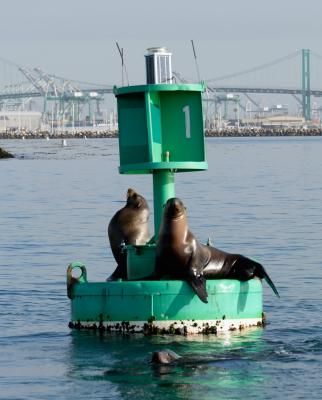
Yesterday, we traveled out to Catalina Island from Long Beach with an eventful ferry boat ride with our research team. We had a naturalist, Jill, with us who specializes in whales, cetaceans (dolphins), and pinnipeds, and helped everyone identify the marine mammals that we saw along the way. As we left the pier, we saw some pinnipeds chilling out on a buoy. Can you tell what species of pinniped they are?
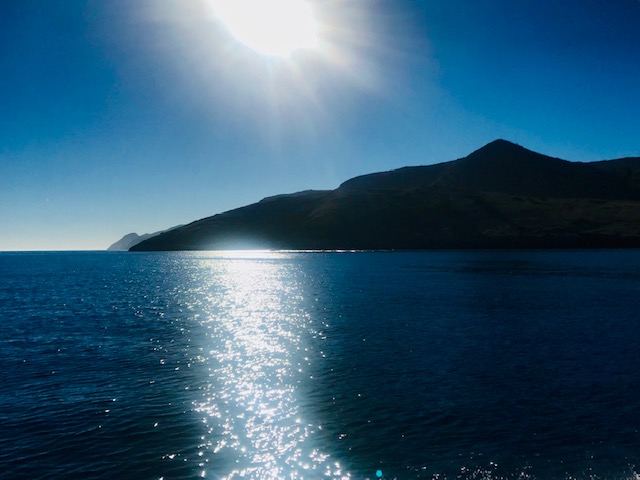
Later, when we reached the open water, we spotted several pods of Pacific White-Sided Dolphins before Catalina started coming into view.
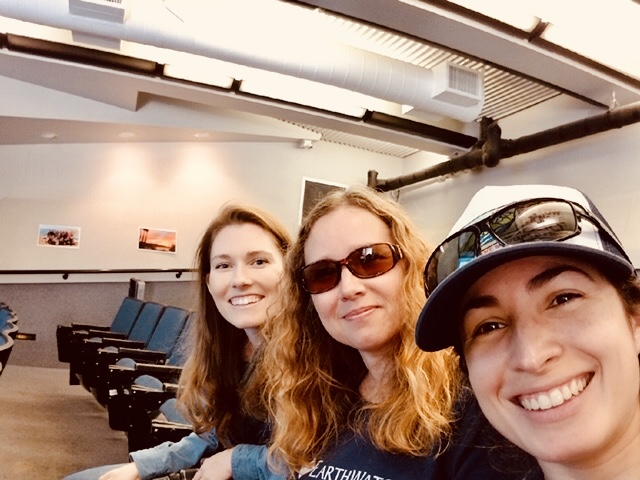
Our afternoon focused on getting familiar with where will be staying on the island, which is a research station called USC’s Wrigley Institute for Environmental Studies. We’re here with many groups of scientists, and graduate students who are doing all kinds of different marine science research to help protect this area and the California coast. Our naturalist, Jill, also spent some time with us on the island giving a fun and informative talk on pinnipeds. Here I am with some of the other teacher fellows in our group (also from the Bay Area) before the presentation.
One of the most interesting things I heard from the talk was that pinnipeds cannot chew their food like we do, and so they have to do something called “thresh” their prey, which makes it look like they are playing with their food. Threshing is when they hold prey with their very large front and back canine teeth and shake their heads back and forth, to break it up into smaller pieces. You may have seen one do this in a youtube video that went kinda viral recently:
What looks like a sea lion attacking a kayaker with an octopus, is actually a sea lion (not a seal like it says!) just trying to eat it’s lunch.
Lucky kayaker or unlucky?
Answer the following questions below:
- So, what species of pinniped is that on the buoy that we saw? How do you know?
- We also learned that unlike us, pinnipeds have to provide their own thermoregulation–what do you think thermoregulation means (do a quick search if you need to) and how do you think the pinniped in my first picture is thermoregulating?

 Conserving Marine Life on Catalina's Coast
Wow, that was so cool and professional.
LikeLike
1. I’m not sure witch pinnipeds are in the first picture on the buoy, but I think they could be Stellar Sea Lions because of their size and the way their flippers look.
2. Thermoregulation means maintaining the body’s core temperature. I think the pinniped in the first picture is thermoregulating by staying in the sun to keep warm. One of them was swimming, maybe it was trying not to overheat.
LikeLike
The pinniped is a California sea lion because it has large front flippers and the island is off the coast of California
I think the thermoregulation mean to keep heat inside of them. The sea lions were storing heat.
LikeLike
I think it is a California Sea Lion because it looks like one. I think thermoregulation is where you have to keep yourslef warm
LikeLike
the species of pinniped on the boat is the California sea lion because the Ca sea lion goes near shore often and has the ears as well
thermoregulation is the prosses of making their own body heat and they do this by surfacing and absorbing the suns heat before diving
LikeLike
1. you saw pinnipeds on the buoy, but I don’t know which kind, picture is blurry
2. thermoregulation means that they slash their food around until it breaks up into smaller pieces. Then they eat it with their back teeth and swallow it.
LikeLike
I think
LikeLike
The pinniped looks like a California Sea Lion because it is off the coast of California. I think that thermoregulation is where you have to keep yourself warm.
LikeLike
1. Sea Lion
2. I think thermoregulation is where the pinniped makes the tempature different.
LikeLike
1) Im pretty sure its a California Sea Lion but Im not sure.
2) Thermoregulation means to keep the heat whiten them. I think the Sea Lions were storing lots of heat whiten themselves so they can stay warm in the cold
LikeLike
1. I think it is a California Sea Lion because it is eared and is in California.
2. Thermoregulating is keeping internally warm. I think the seals on the buoy were huddled together to keep warm.
LikeLike
1. California Sea Lion
2. when they keep their body temperature the same
LikeLiked by 1 person
Pinneped
LikeLike
1. California Sea Lion because I compared it to other photos of Sea Lions
2. When they keep their body temperature the same
LikeLiked by 1 person
1. I think its the sea lion.
2. It is thermoregulating by sitting up in the sun to make it more warm instead of being in the water.
LikeLike
1. California Sea Lion
2. when they keep the temperature of their bodies the same.
LikeLike
It is an eared sea lion, most likely California Sea Lion because it is near the coast of California, and it has large front flippers. I think thermoregulation means to regulate heat, or to keep your bodies inside heat, and I think the pinniped is thermoregulating by staying in the sun. The heat from the sun is helping the heat in its body stay inside.
LikeLike
California sea lion
To keep your body at a steady temperature
LikeLike
1. It may be a California sea lion because it is in California and it has the same flipper shape as they do
2. They might be by huddling up together to make more body warmth thermoregulating
LikeLike
They might group together
LikeLike
I think it is an eared sea lion, most likely California Sea Lion because it is near the coast of California, and it has large front flippers. I think thermoregulation means to regulate heat, or to keep your bodies inside heat, and I think the pinniped is thermoregulating by staying in the sun. The heat from the sun is helping the heat in its body stay inside.
LikeLike
I think it is a seal lion. I think that thermoregulate is to regulate heat.
LikeLike
1. I think it is a Sea Lion because they are near California and have large flippers.
2. Thermoregulation is how you regulate your body temperature. The seal is doing this by lying in the sun to heat back up.
LikeLike
Thermoregulation means to keep heat inside them.
LikeLike
1. I think it is a sea lion because a lot of sea lions live on the California coast.
2. I think thermoregulation means regulating heat in order to maintain internal heat. I believe the pinniped is using heat from the sun to do so.
LikeLike
1. The pinniped is a California sea lion because it has large front flippers and the island is off the coast of California.
2. The sea lion is thermoregulating by sitting on a warm surface that has most likely been heated by the sun and the sea lion is next to another sea lion so they are producing heat for each other.
LikeLike
I think it was the California sea lion because it had similar characteristics.
Thermoregulation is the process in which your body keeps its core temperature. They’re grouping together to share core body heat (which is warmer since they’re mammals).
LikeLike
1. It appears the animals are Sea Lions, probably California Sea Lions, as it is off the coast of California.
2. Thermoregulation is the ability of an organism to keep its body temperature within certain boundaries, even when the surrounding temperature is very different. It seems that they are absorbing sunlight some how and using their flesh to keep in the heat and keep the cold air and water out.
LikeLike
1. I think it is the California Sea Lion because it is located off the coast of California and it has large front flippers.
2. Thermoregulation is when you regulate your body’s temperature. I think the pinniped in the first picture is thermoregulating by laying out in the sun in order to stay warm enough.
LikeLike
1. We believe that it is a seal lion because of previous encounters with this species at the pier and local zoos.
2. Thermo- Regulation is the act of animals keeping the same temperature. I mean doesn’t there body control that?
LikeLike
I believe that the pinniped pictured above is a California Sea Lion. I infer this because these sea lions can be found near the Catalina Islands which are off the coast of California. I also believe this, because just like in the picture, the pinniped has large front flippers.
Pinnipeds warm through thermoregulation. This is a process that allows a body to maintain core internal temperature. A thermoregulation mechanism is designed to return your body to homeostasis. The Sea Lions in the picture are thermoregulating because they are warming themselves in the sun.
LikeLike
1. I think that it’s a California Sea Lion because I visited their and they told us that it was a Sea Lion.
2. Thermoregulation means a process where your body maintains heat. In the first picture their is thermoregulation because they are heating the up in the sun.
LikeLike
I think it is most likely to be a sea lion because it looks like one. I’d say the sea lions were warming up on the buoy.
LikeLike
1.) I believe that it was sea lions because they can live off the Californian coast
2.) Thermoregulation is regulating internal body temperature or heat. While on the buoy, I’m assuming they were trying to heat up while basking in the sun or huddling together in order to stay warm.
LikeLike
1. I think that you saw a California Sea Lion. I think they are sea lions because they are a dark brown and in the picture, they are resting on their flippers. And they are California Sea Lions because they are off the coast of Catalina Islands.
2. Thermoregulation is how your body maintains its internal temperatures. I think that they are doing this by sitting in the sun. The suns heat will help maintain regular internal temperatures by heating the sea lions after they have been in the cold California coast all day.
LikeLike
I think that the Pinniped in the picture above is a California Sea Lion. First, this is California. Second, the Pinniped above has large flippers. Third, the California Sean Lion can often be found off the coast of the Catalina Islands.
Thermal regulation is a process that allows your body to maintain its core internal temperature (according to a very reliable source,) Google. I believe that this Pinniped is using the sun to warm its skin using the thermal energy the sun produces.
R.I.P that octopus…
LikeLike
whoops, I accidentally said sean lion instead of sea lion. Please ignore that.
LikeLike
I think that the pinniped on the buoy was a sea lion because the pinnipeds in the picture have skin looks shiny like a sea lions skin. I also think that the pinnipeds in the picture are sea lions because they live in the Los Angelus Bay, and there are California Sea Lions that live there as well.
Thermoregulation is the process that the body uses to maintain its core internal temperature. I think that the pinniped in the picture is thermoregulating by lying in the sun. The sun is warming up the pinniped after they were in the cold Californian coast waters.
LikeLike
I think the Pinniped is a California Sea Lion because the characteristics are similar to ones that I have seen before.
Thermoregulation is a process that helps the body maintain a core temperature. I think this Pinniped is thermoregulating because it is probably lying in the sun to get hot after swimming in the cold water
LikeLike
It is of some possibility that the pinniped atop the buoy is within the species of sea lion. The specific type of sea lion, I believe it is the California Sea Lion for I have been to the seashore around this time of the year and have witnessed this Sea Lion. The looks of it seem to match with the California Sea Lion, and it makes sense for them to be on our coast during this time of the year.
Pinnipeds rely on thermalregulation which is a process that allows for your body to maintain the core internal temperature. Thermalregulation works to achieve homeostasis. The pinnipeds in the first photo are using heat from the sunlight to increase their body temperature; most likely frigid water caused the pinnipeds to realize they needed to raise their internal temperature to reach their homeostasis.
LikeLike
I think that the pinniped in the first picture is a California Sea lion because it looks a lot like it and it is eared
Thermoregulation is when an animal retains its core temperature keeping your body heat from going beyond certain boundaries even if the outside temperature is very different.
LikeLike
1. California Sea Lion
2. they keep their body temperature the same
LikeLike
1) I’m pretty sure that the pinniped on top of the buoy is a California Sea Lion
2) Thermoregulate is what animals use to retain its core temperature. For example, if it is really hot outside, your body tries to thermoregulate to keep your body.
LikeLike
2) …. body cool
LikeLike
1. California Sea Lion because they are darker and Catalina islands are near the coast of California.
2. Thermoregulation is regulating inner body temperature. They were trying to heat up by clumping together.
LikeLike
I think that the pinniped in the picture is a California Sea Lion because of the way its characteristics. It is also off the coast of California.
I believe that thermoregulation is when you have to regulate your personal body temperature to keep from getting too cool or too hot. This seal might be thermoregulation because it is lying in the warm sun after swimming in the cold water.
LikeLike
The pinniped is a California Sea Lion because of its large flippers and it’s located off the coast of California. Thermoregulation is when a species keeps its own body temperature.
LikeLike
On the buoy, the species is a California sea lion. Thermoregulation is when you are retaining your own body temperature.
LikeLike
I have no idea what type of pinniped is on the Channel Marker. I am not very good at identifying different species.
Thermoregulation is when an animal does something to regulate their body temperature. The pinnipeds are most likely cold, and sun-bathing in the sun in order to warm up.
LikeLike
So, what species of pinniped is that on the buoy that we saw? How do you know?
We also learned that unlike us, pinnipeds have to provide their own thermoregulation–what do you think thermoregulation means (do a quick search if you need to) and how do you think the pinniped in my first picture is thermoregulating?
I think that that type of pinniped was a sea lion. I thought this because I have witness a Sea lion before.
The Sea lions are getting sun and keeping a flipper in the water to regulate there body temperature.
LikeLike