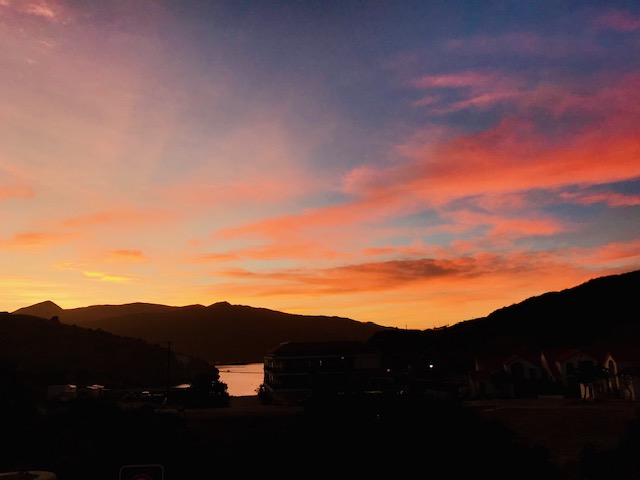
This was our view from where we ate dinner at the research institute this evening.
One of the many cool things happening with this field research experience, are the people that you meet and what you can learn from them. We all come together for meals, and you have many opportunities to talk to scientists about their research and what brings them out to Catalina. Here are some of the things we’ve talked about in our conversations regarding what make islands really special places.
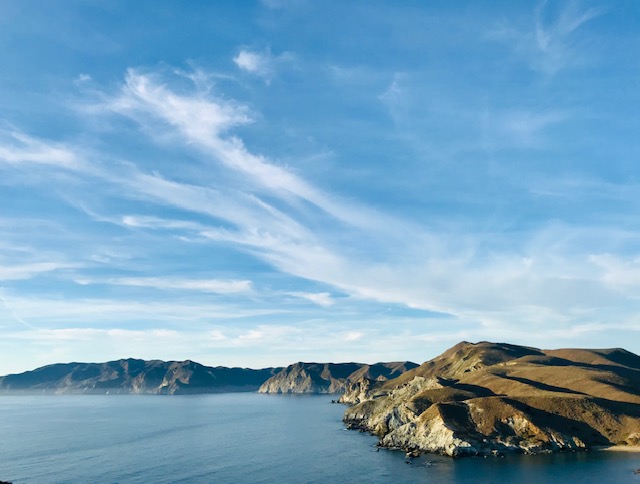
Islands have one thing in common
The inhabitants on islands migrated to their homes from somewhere else. Some swam, some flew, others were carried by animals, wind, floating debris, or in recent times, by humans. As a result, islands are home to fewer species than continents. Populations for each species also tend to be smaller. These, along with other factors, make island ecosystems especially vulnerable to change.
Inconceivable!: Endemic Species
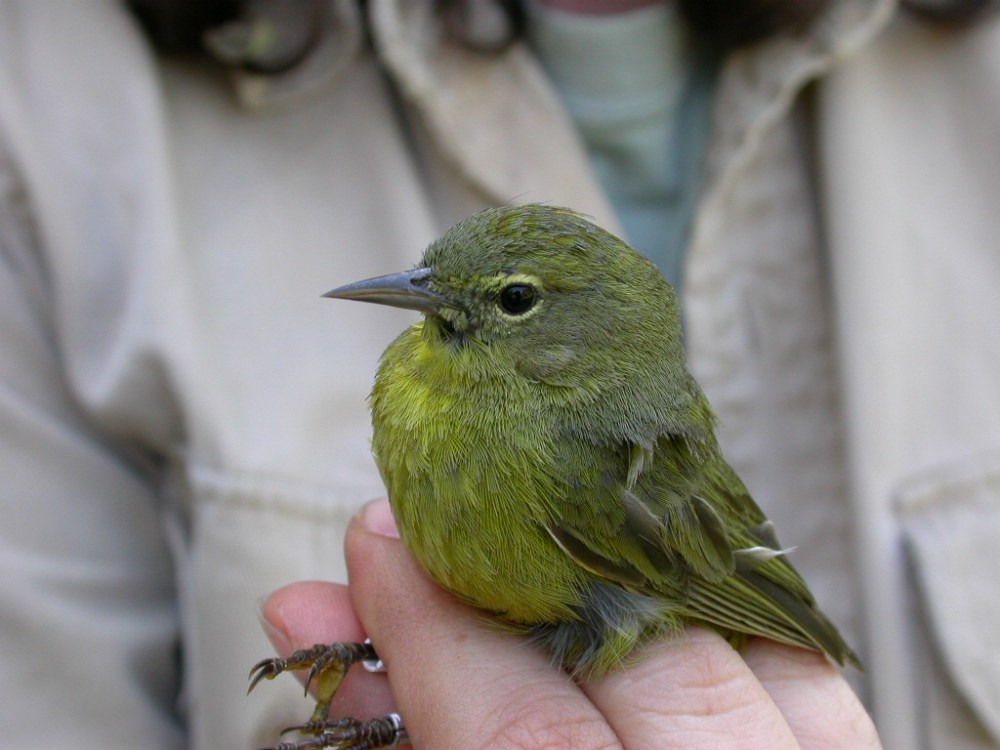
A species is considered endemic when it is found only in one area or region. Islands generally have many more endemic species than continents. These island plants and animals often evolve to be different from their mainland relatives. This Orange-Crowned Warbler below is only found on Catalina Island.
Rodents of Unusual Size (ROUS): Island Dwarfs and Giants
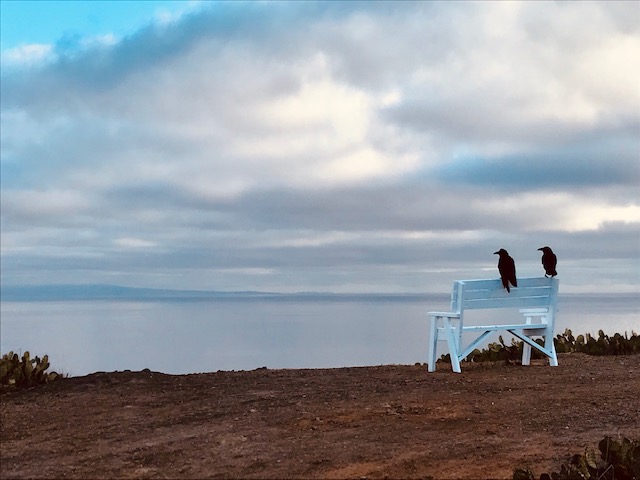
Reduced competition for resources and greater abundance of food can cause some island species to evolve to be larger. This is known as “island gigantism.” Lack of natural predators and scarcity of food can cause some island species to evolve to be smaller. This is called “island dwarfism.” For instance, the squirrels and ravens are HUGE here. And the Catalina Island Fox is so adorably little.
The Dread Pirate Roberts: Dangerous Invaders
Introduced plants, animals, and diseases pose a tremendous threat to islands. The addition or removal of a single species can drastically upset the balance of an island ecosystem. When we snorkeled today, we observed an algae that is starting to take over the marine environment around Catalina. If it continues to spread, it can overcrowd the more beneficial algae species that provide a food and habitat for local fish to flourish.
It’s hard to convey just how inspired I am by all of the work that is being done here by scientists to learn about and/or address these issues!
In the comments, write one thing you learned/found interesting, and one thing you are wondering about islands.

 Conserving Marine Life on Catalina's Coast
Wow the view is phenomenal, it must be so fun over there.
LikeLiked by 2 people
Hey Cathy!
I really found how the animals got to the islands was interesting! I’d like to learn more about how, and what creatures you waw while snorkeling!
LikeLiked by 3 people
* Saw
LikeLiked by 2 people
The view is beautiful hope you’re having fun!
LikeLiked by 1 person
I learned reduced competition for resources and greater abundance of food can cause some island species to evolve to be larger. This is known as “island gigantism.” We miss you CATHY
LikeLiked by 1 person
One thing I found interesting is that only one species can really upset the island. I wonder how animals end up here if they didn’t start here.
LikeLiked by 1 person
Interesting: The inhabitants on islands migrated to their homes from somewhere else. Some swam, some flew, others were carried by animals, wind, floating debris, or in recent times, by humans
LikeLiked by 1 person
I thought that learning about how the islands are inhabited by other species, of things, that come from another place. I wonder why it is so much more beautiful than in SF, maybe because of the polution.
LikeLiked by 1 person
I found it interesting that islands can evolve to be bigger or smaller. I’m wondering how much bigger they can evolve.
LikeLike
The islands themselves do not evolve to be bigger or smaller, the animals on the island can.
LikeLike
I learned that there are diseases that affect the whole island. My question is how do the diseases get there?
LikeLiked by 2 people
That’s cool how if a species is left alone by other species with an abundance of food they will evolve to be bigger.
LikeLiked by 2 people
One thing I learned was that since the island doesn’t have much competition for food so animals are bigger on the island.
LikeLiked by 1 person
I learned that the invading plants/animals/organisms are very bad. I wonder how the Ravens evolve so big.
LikeLiked by 2 people
I learned that islands are vulnerable to change, because of a small population, a small number of species compared to continents, and other factors. What other animals have you seen that would seem bigger or smaller compared the rest of their type.
LikeLiked by 2 people
Great question! Catalina has a subspecies of the California Quail that is bigger than what we see on the mainland. We’ve seen a lot of those!
LikeLike
the view is very pretty
LikeLiked by 1 person
One thing I found interesting was the island gigantism. I wonder what it would be like living there. What would be differences from the place we are now?
LikeLiked by 1 person
I learned that some animals get either bigger or smaller when they live on islands. This is really cool stuff you I hope you tell us more.
LikeLiked by 1 person
I was really interested to learn about that fewer animal that lives on the island. It is a big problem to be interested in saving that idea.
LikeLike
I found the dwarfism and gigantism was cool and I wondered if the ravens are stealing the foxes food.
LikeLike
I learned that the island doesn’t have good competition for food, so animals are bigger on the island.
LikeLiked by 1 person
I learned that you really like getting together with other scientists.
What are some things you learned from other scientists?
LikeLike
One thing I found interesting was that island species can evolve to grow smaller or larger. One thing I am wondering about islands is what would happen if an island species moved to a mainland instead of the other way around, is that possible? What would happen?
LikeLike
how many big mammals are there
I learned that all the inhabitants migrated their
the algae there is getting taken over by bad algae
LikeLike
The Catalina Island foxes are interesting because they are cute
LikeLike
The algae was really interretingss and it would be cool to to learrn moree about it,
LikeLike
I learned that when living on the island, they either get bigger or smaller
LikeLike
That this is the only place where there is that type of plant, and that they evolve to the animals around them.
LikeLike
I learned that species on islands can be bigger than the same species on continents, or it can be smaller. They adapt based on what the environment is like. When they get bigger, it is called “island gigantism”, and when they get smaller it is called “island dwarfism”. The species can grow bigger because of the fact that there are less things competing for food, and more food available because of that, or they can get smaller if the island has less food, and the species can’t eat as much because of that. I am wondering how much bigger a raven from Catalina Islands is than a raven from North America.
LikeLike
I found the stuff about how much the environment/plants affected the growth of the animals. If certain animals began to get too small would they then be more vulnerable to going extinct because they are easier to be eaten?
LikeLike
One thing I found interesting was that islands are homes to fewer and smaller amounts of species compared to continents. I wonder how long it takes for the debris to create an island.
LikeLike
I that if one plant is gone it can change the eco-system is interesting, and I wonder if smaller animals can still be predators
LikeLike
1. I learned about how much the food chain really matters, if one thing dies off, all the species on the island will be upset.
2. I wonder what the island was like before humans were able to come to it.
LikeLike
I learned that islands tend to have fewer species than continents and that they are more susceptible to change.
I wonder what you have in common with other scientists.
LikeLike
That inhabitants on islands migrated from somewhere else and I wonder how many people live on Catalina.
LikeLike
I learned that removing just one small species can cause damage and lack of balance to the entire island. I am wondering what the most endangered species on the island is.
LikeLike
One thing I found phenomenal is the size of some of the animals. It’s crazy that they can evolve to be so huge or so little!
LikeLike
I found it interesting that some species get smaller or larger based on how many predators they have.
LikeLike
I learned that they call it the Orange-Crowned Warbler. But it’s actually green and grey bro.
LikeLike
We found it interesting that animals on Catalina Island are different sizes then they are in other locations or other ecosystems. We wonder why the Orange Crowned Warbler has that name if it is a green bird. What is the origin of this name and the story behind it?
LikeLike
In the comments, write one thing you learned/found interesting, and one thing you are wondering about islands.
The fact that every animal, plant, and microbiome has a place in the island’s ecosystem shows how us humans must protect the environment for the ecosystem of the world is already in turmoil. I am wondering if there are any examples in history where the aftermath of an extinction of a species is even more drastic.
LikeLike
I learned that all of the inhabitants on Catalina Island migrated there from somewhere else which made there be fewer species of animals than continents. I also learned that the animals on the island are different sizes than they regularly are. I wonder why the animals are different sizes on Catalina Island than they regularly are?
LikeLike
I learned about how islands change based on how their resources increase and deplete. I wonder why there’s a bird that’s green/gray that’s named the ‘Orange-Crowned Warbler’.
LikeLike
Really loving the Princess Bride theme!
I learned a lot about the algae that inhabits the waters. Snorkeling sounds fun I hope you are having a great time!
LikeLiked by 1 person
I learned that when there is not a lot of competition can cause some species to become larger.
LikeLiked by 1 person
1. I found it interesting that islands usually have more endemic species than continents.
2. I would like to learn more about what animals you saw while you where snorkeling
LikeLike
I thought the fact that there are some endemic species in Catalina Islands was interesting. For example, the beautiful Orange-Crowned Warbler is only found on Catalina Island. I wonder why the Catalina Island Fox is so little.
LikeLike
Can the endemic species that inhabit the island survive somewhere else if they ever migrated?
LikeLike
I found it really interesting that due to the lack of species and predators, animals can evolve to become smaller and smaller. One question I have is: How long the islands have been inhabited for?
(Also, love the Princess Bride references!)
LikeLiked by 1 person
I thought that it is really cool that there are certain species that only live in the islands.
LikeLike
One thing that I found interesting was the growth of the animals and how much they change when evolving.
LikeLike
I thought it was cool that if a species is left alone by other species with an abundance of food, the animal will evolve to be bigger. I’d love to learn more about the algae that you talked about.
LikeLike
Something that caught my attention was that endemic species are frequently found in islands. Due to this animals can evolve to become smaller and smaller.
LikeLike