So, where am I going? In a week, a small crew of Bay Area Science teachers and I will be joining scientists on Catalina Island, one of the Channel Islands off of the coast of southern California. The Channel Islands are a gorgeously unique chain of eight islands, five of which are designated as a national park, with crystal clear water, kelp forests, rocky reefs, and a rich diversity of wildlife that scientists are working hard to protect. Catalina Island, which is where we will be focusing our research efforts, resides about 20 miles off the coast of Los Angeles, but is a world away from urban life.
I first heard of the Channel Islands several years ago, when I learned about the Channel Island Fox—an adorable, tiny, endangered fox that only lives on six of the eight islands. Beginning in 1999, scientists worked together to create and implement a recovery plan based on the field work of many individuals, which kept the fox from going extinct when there were only 15 left!
On this expedition we will be focusing on protecting marine mammals, and intertidal organisms. We will also be doing water quality testing and surveying how humans are using the habitat, along with what impacts humans might be having on the environment. The island is surrounded by a whole system of Marine Protected Areas (MPAs), which you can think of like national parks under the sea. MPAs restrict human activity for a conservation purpose, typically to protect natural resources. One really important aspect of our field work on the island is to contribute to Pacific coast data sets that can potentially provide scientists with strong evidence to help preserve these MPAs, keeping them healthy and pristine for many different populations of organisms.
And an extra special bonus is that I might finally get to see a Channel Island Fox while I’m there!!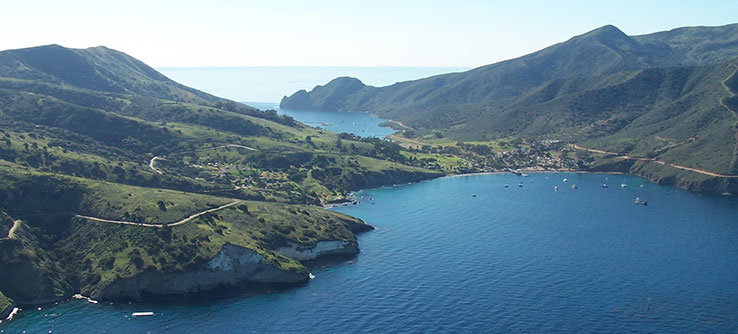
Now, I want to hear from you! In the comments, answer at least 1 of the following questions, and feel free to also ask me a question you might have about the expedition:
1.) Have you ever been to a national park in California, or a national park somewhere else in the U.S.? If so, where did you go and what was your favorite thing about it? If not, which one would you most like to visit?
2.) What do you think are some of the long term benefits of National Parks and Marine Protected Areas?
3.) Click on the map and see if you can find the 8 islands that make up the Channel Islands. Zoom in on Catalina Island. Point out some interesting features that you notice about Catalina or its coastline.

 Conserving Marine Life on Catalina's Coast
I’ve been to Pinnacles with the whole grade. My favorite part of the trip was the views and the bat cave we went to.
LikeLiked by 1 person
I went to Pinnacles National Park for a school camping trip in 6th grade. It was for a few days, and while we were there we went on some really nice hikes. I liked that we got to learn a lot about nature and our natural surroundings.
I also went for a day or two to Yosemite National Park. Even though we were just passing through on our way somewhere else, I got to see and learn about so much natural growth. I hope to go again someday for a longer period of time.
If we didn’t have parks or areas that were protected by the government, more animals would be extinct, and we’d have so little of the beautiful environment and fauna/flora rich habitats. We keep ourselves grounded to the earth and to nature with these parks, and they remind us of everything we still have left in this world to protect. In the long run, the diversity of plants and animals give us clean oxygen and they keep the food chain balanced so we may live on this earth for a longer time.
3.) Santa Catalina Island is located just below Los Angeles, in California. I’d imagine that it’s quite popular, given its convenient location, and I’m surprised that I haven’t heard much about it (before reading this). I think the shape of the island also gives for the opportunity of exploration!
LikeLiked by 1 person
1.) I went on a roadtrip to Big Sur and went to Julia Pfeiffer Burns State Park, Pfieffer Big Sur State Park, as well as Point Lobos (These are state parks although I’ve also been to Pinnacles and Yosemite). The highlight of this trip for me was seeing seals frolicking in the water and playing with their pups in a small cove in Point Lobos. They seemed so happy and active and it’s wonderful that the land there is protected.
2.) Preserving wildlife and natural surroundings is crucial in our constantly industrializing world. In order to sustain diversity in wildlife and plant life, we have to rely on state/national parks to truly prevent people from destroying these settings. A natural habitat in order to foster animal welfare is also an important role that state/national parks play in the long term. This helps increase reproduction of animals in which there aren’t threats from humans and ecosystems stay un-tampered with.
3.) When observing the map of the Channel Islands, I notice that the majority of cities/villages are based on the coast, making me think they are centered aroumd fishing or trading. The land in the middle of the islands also tends to be more mountainous and rocky.
LikeLiked by 1 person
Some long term benefits of National Parks and MPA’s are the growth in population of animals. It also keeps animals like the Channel Island Fox from going extinct.
LikeLiked by 1 person
I have been to Pinnacles National Park and Henry Coe (the largest state park in northern California). Both of these parks are in California, and I if I was able to go to any national park in the U.S. I would go to the Grand Canyon. My favorite thing about both my trip to Pinnacles and Henry Coe was seeing all of the beautiful nature through rigorous hikes and camping out. Going on these trips reminded me how beautiful nature is, and we don’t need to have gadgets and technology to have a good time.
I think that some of the long-term benefits of National Parks and Marine Protected Areas are that they protect the plants and animals that live there. I also think that the words, “National Park” deter some of the people that are more willing to trash the place and not take into account the plants and animals. I also think that there could be rules and/or regulations that protect the area especially Marine Protected Areas that prohibits people and companies to “dump” all of the trash and things like that into the ocean.
I notice that all of the islands have unique shapes. When looking at Catalina Island, I notice that there are kind of two main parts of the island. One of the parts is larger and has more rounded edges. The second part is more of an arrow shape. I wonder why it looks like that?
LikeLiked by 1 person
As a class we have been to both Pinnacles, and Henry Co National Park. My favorite part about the parks were the beautiful, natural environment. The surroundings were very peaceful and quiet, it was astonishing to see land that had not been converted into a busy city.
Overall, I think these areas are very beneficial to the environment. Protecting the wild life, is a very important action. Countless species are going extinct, and we need to take progressive action to protect them because as our earth evolves the species of animals should be there for future generations to come.
LikeLike
I go to Yosemite with my sleep away camp every year. My favorite thing we have done is hike through McGurk meadows. It is a wild flower field and very beautiful. The experience was amazing and very reflective. I hope to go back soon!
LikeLike
Hi Cathy! I have gone to pinnacles and henry coe with my class as well as Yosemite and yellow stone with my family.
I think that the national parks are really important because they preserve nature and animals which we really need to take care of.
Seeing the foxes sounds so cool and I can’t wait to see you when you get back.
LikeLike